When people look in the mirror and notice sagging cheeks or a blurred jawline, they often ask, “Can I ever get my face back to the way it used to be?”
This concern becomes even more pressing when an important event or social occasion is approaching.
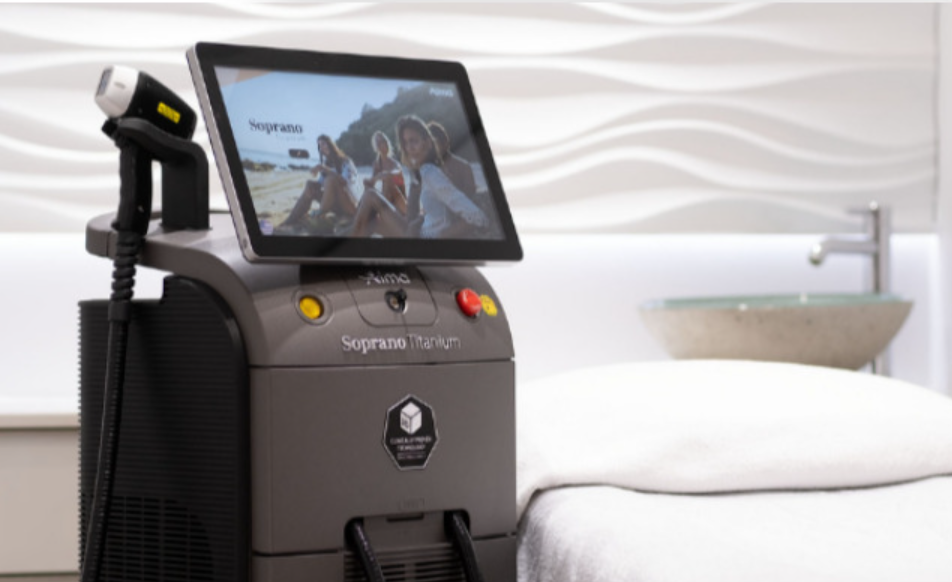
Titanium lifting can provide a reliable solution for those struggling with these worries. This advanced treatment uses three different laser wavelengths to target multiple layers of the skin. It is designed to be comfortable, with minimal downtime, while delivering noticeable improvements.
01. How It Works
Titanium lifting utilizes three wavelengths (755nm, 810nm, and 1064nm) delivered simultaneously. Each wavelength plays a distinct role:
- 755nm works in the superficial layers, brightening dull and uneven skin tone.
- 810nm targets the dermis, stimulating new collagen production.
- 1064nm penetrates deeper structures to improve elasticity and firmness.
Two operating modes are used depending on individual needs:
- STACK mode: applied to sagging areas or regions requiring intensive care.
- SHR mode: ideal for refining the entire facial contour.
Throughout the procedure, a powerful cooling system keeps the skin’s surface comfortable, allowing energy to be delivered safely and effectively.

02. Individual Factors and Treatment Experience
Not all skin responds the same way. A person in their early twenties will not react the same as someone in their fifties.
- Younger skin typically responds quickly to laser stimulation, with collagen production occurring more actively.
- Older skin tends to show changes more gradually.
- Skin thickness is another key factor. Thinner skin requires a lower energy setting, while thicker skin often benefits from stronger energy.
For severely damaged or sagging skin, expectations must be realistic. Deep wrinkles or a pronounced double chin may not be fully corrected with titanium lifting alone—in such cases, combining it with radiofrequency treatments may be advisable.
During treatment, most patients feel minimal discomfort thanks to the cooling system. With topical anesthetic cream, the sensation is usually described as a gentle warmth or a slight prickling. After the session, patients can wash their face and apply makeup immediately, with little to no swelling or bruising, making it easy to return to daily activities the same day.

03. Results and Longevity
Immediately after treatment, you may feel a temporary tightening effect. The true improvements, however, develop gradually as collagen regeneration takes place—typically becoming visible over 1 to 3 months.
Results usually last 6 months to 1 year, though this varies depending on individual lifestyle and skincare habits.
Energy is measured not by “shots” but by total joules delivered. Because the device emits dozens to hundreds of laser pulses per second, treatments are typically administered in units such as 40KJ, 60KJ, or 80KJ. The number of sessions and energy level should be tailored in consultation with an experienced specialist, but a common protocol is three sessions at regular intervals.
Final Thoughts
Titanium lifting is an excellent option for those seeking natural, gradual improvements without significant downtime. By combining three wavelengths, the treatment offers versatile benefits, but the best outcomes depend on careful consultation and personalized planning with a skilled dermatologist.
For patients with busy schedules, the comfort and minimal recovery make this procedure especially appealing. With a tailored design suited to your facial structure and skin condition, you can achieve results that look natural and satisfying.
Edited by Dr. Choongho Lee


Leave a Reply